Executing large-scale property improvements requires far more than enthusiasm and basic hand tools. Whether tackling structural modifications indoors or completely re-engineering an outdoor living space, the difference between a frustrating, drawn-out ordeal and a seamless, professional outcome almost always comes down to tool selection. Using underpowered or makeshift gear increases physical strain, leads to premature material waste, and introduces severe safety hazards to the job site.
Modern construction equipment, high-precision diagnostic tools, and commercial-grade power machinery are specifically engineered to eliminate labor bottlenecks. By understanding which specialized tools align with particular structural and mechanical tasks, property owners and contractors can streamline project schedules, maintain strict tolerances, and achieve clean, durable finishes that withstand years of continuous use.
Select Soil-Preparation Machinery and Heavy-Duty Demolition Gear

Major outdoor transformations begin with proper site clearing and earth preparation. Attempting to grade large lawn areas using manual shovels and wheelbarrows often leaves an uneven sub-grade, causing poor drainage and uneven turf settling. Employing walk-behind hydraulic tillers, mechanized soil cultivators, and water-filled turf rollers creates a smooth, compacted base required when establishing healthy sod across expansive residential lots.
Laying fresh turf over properly tilled, debris-free soil ensures that grass roots establish deep moisture contact quickly. Utilizing motorized sod cutters allows crews to strip away old, weed-infested lawn layers cleanly without gouging the underlying topsoil, preserving the precise slope needed for rainwater drainage.
-
Hydraulic Tillers: Break up hard-packed clay and rocky soil down to six inches, allowing root systems to penetrate deep into the ground.
-
Water-Filled Rollers: Compact loose topsoil evenly before laying grass strips, eliminating air pockets that dry out delicate roots.
-
Laser Levels: Establish accurate site slopes across large yards, guiding grading machinery to prevent standing water near foundations.
While outdoor projects focus on earth-moving machinery, comprehensive indoor overhauls require heavy-duty demolition equipment to modify floor plans safely. Managing a full-scale whole home renovation involves tearing down non-load-bearing walls, stripping outdated flooring, and rerouting concealed utility lines without damaging the primary framing structure.
Equipping crews with commercial rotary hammers, reciprocating saws with carbide-tipped blades, and dust-extraction HEPA vacuums keeps demolition efficient and controlled. Utilizing proper waste chutes and drywall lifts minimizes physical wear on workers, allowing interior framing and mechanical rough-ins to proceed on schedule.
Utilize Specialized Trenching Tools and Automated Flow Gauges
Maintaining a lush, healthy landscape throughout hot summer months requires a balanced subterranean watering delivery system. Manually digging hundreds of feet of shallow trenches for supply lines using hand spades damages surrounding tree roots and creates messy soil piles. Utilizing compact power trenchers or vibratory pipe-pullers allows contractors to install subsurface supply lines quickly with minimal disturbance to established topsoil.
Integrating an automated irrigation system relies on specialized tools like ratcheting PEX cutters, low-voltage wire strippers, and backflow preventer testing kits. These specialized tools allow technicians to assemble manifold valves and install pop-up spray heads with leak-free precision across multiple watering zones.
-
Vibratory Pipe Pullers: Insert flexible polyethylene pipe beneath existing turf without digging open trenches, preserving grass health.
-
Digital Flow Meters: Calibrate water volume and line pressure across zones, preventing low-pressure dead spots and misting.
-
Backflow Testing Kits: Ensure cross-connection assemblies function correctly, protecting household drinking water from soil contaminants.
Fine-tuning an underground watering network requires continuous pressure monitoring to prevent water hammer and line blowouts. Installing adjustable pressure-regulating valves behind main zone manifolds guarantees steady water volume to drip lines and rotor heads.
Calibrating watering schedules with smart digital controllers allows property owners to optimize water delivery based on local weather conditions, preventing overwatering while protecting their landscaping investment.
Deploy Digital Diagnostic Gauges and High-Pressure Line Cleaners

Central cooling units and indoor environmental systems require specialized thermodynamic diagnostic instruments to maintain peak operating efficiency. When a cooling unit fails during high summer heat, attempting to troubleshoot without precise instruments can lead to incorrect component replacements or compressor damage. Using digital manifold gauges, micron gauges, and thermal imaging cameras allows technicians to diagnose electrical faults and refrigerant leaks during routine ac repair.
Digital manifolds provide real-time superheat and subcooling calculations, ensuring the cooling circuit operates within exact manufacturer tolerances. Thermal cameras quickly reveal clogged evaporator coils, failing fan motors, or air leaks within attic ductwork, allowing for targeted repairs that restore system performance rapidly.
-
Digital Manifold Sets: Measure system pressures and saturation temperatures simultaneously, identifying refrigerant restrictions instantly.
-
Refrigerant Recovery Pumps: Safely evacuate and trap old refrigerant according to environmental standards prior to component soldering.
-
Ultrasonic Leak Detectors: Pinpoint micro-fractures in copper tubing by detecting high-frequency sound waves emitted by escaping gas.
While HVAC systems manage air quality, interior plumbing networks require heavy-duty mechanical gear to resolve severe wastewater blockages. Operating commercial motorized drain augers equipped with hardened steel cutting heads removes stubborn tree root intrusions, grease buildup, and mineral scale during drain cleaning operations.
Pairing mechanical drain snakes with high-pressure hydro-jetting equipment scours the inner walls of main sewer lines clean. Inspecting cleared lines using self-leveling fiber-optic cameras provides visual verification that structural pipe walls remain sound and free of fractures.
Master Metal-Braking Tools and Secure High-Reach Staging Systems
Preserving an architectural exterior against driving rain, wind, and UV degradation requires precision metal-shaping tools and durable building wraps. Fitting custom architectural trim around window frames, soffits, and exterior wall corners demands specialized metal-bending brakes. Operating a portable aluminum brake allows installers to fold factory-painted coil stock cleanly, custom-fitting weather-resistant fascia covers and trim accents when applying aluminium siding.
Precision hand seamers, dual-direction metal shears, and snap-lock punch tools ensure that metal trim edges lock together tightly. Properly shaped exterior trim channels wind-driven rain away from underlying timber wall sheathing, preventing hidden wood rot and mold development.
-
Portable Bending Brakes: Form complex J-channels, drip caps, and fascia covers directly on the job site from continuous metal coils.
-
Compound Aviation Shears: Cut clean edges through thick aluminum sheet metal without warping or burring the painted finish.
-
Pneumatic Siding Nailers: Drive corrosion-resistant fasteners to exact depth tolerances, allowing metal panels to expand and contract naturally.
Working safely at rooflines to maintain exterior water-shedding assemblies demands specialized high-reach access gear. Deploying heavy-duty aluminum extension ladders fitted with standoff arms and roof ridge hooks allows workers to perform essential gutter repair without crushing fragile eave edges or damaging shingle overhangs.
Wearing full-body safety harnesses secured to certified roof anchor points protects technicians while clearing debris, re-securing loose hanging brackets, and applying silicone seam sealants. Replacing damaged downspouts and pitching gutters correctly prevents overflow water from rotting underlying fascia boards and soaking foundation soils.
Utilize Torsion-Spring Safety Tools and Precision Pipe Crimpers
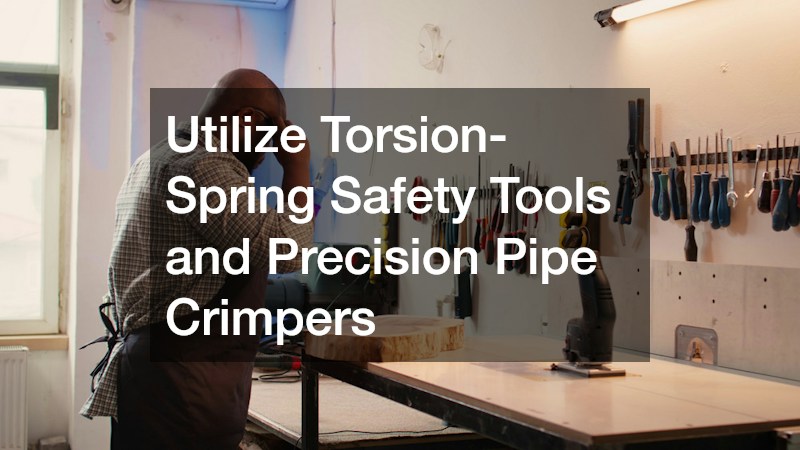
Heavy structural access points like overhead vehicle doors rely on high-tension spring mechanisms that require extreme caution and specialized tools during installation or service. Attempting to adjust high-torque torsion springs using improvised screwdrivers or ill-fitting rods presents severe injury risks. Utilizing solid steel winding bars engineered specifically for spring cones ensures controlled, safe tensioning when servicing heavy garage doors.
Laser alignment tools, heavy-duty locking pliers, and high-torque impact drivers allow technicians to level door tracks and secure mounting brackets firmly to ceiling joists. Smooth, whisper-quiet operation depends on precise track alignment, preventing roller binding and reducing strain on automatic drive openers.
-
Hardened Steel Winding Bars: Safely increase or decrease counter-balance tension on overhead torsion springs without slippage.
-
Track Alignment Lasers: Verify that vertical and horizontal steel tracks are perfectly parallel, preventing wheel binding.
-
Pneumatic Cable Crimpers: Secure heavy steel lift cables to bottom corner brackets, ensuring balanced weight distribution during lifting.
Inside the home, maintaining fluid supply networks demands specialized mechanical pressing and crimping tools to execute permanent, leak-free pipe joints. Utilizing manual or battery-powered PEX crimping tools, pipe threaders, and heavy-duty adjustable wrenches allows plumbers to execute reliable plumbing repair on copper, PEX, or cast iron piping.
Modern press-fit crimping tools join copper and stainless steel fittings in seconds without open flames, eliminating fire hazards inside tight wall cavities. Utilizing proper pipe cutters ensures clean, burr-free cuts that prevent turbulent water flow and internal pipe erosion over time.
Deploy Airless Paint Sprayers and Surface Decontamination Equipment
Achieving a smooth, factory-grade finish on interior walls, ceilings, and trim requires advanced fluid delivery systems and meticulous surface preparation tools. Relying solely on traditional hand brushes and rollers often leaves visible lap marks, stippled textures, and uneven paint thickness. Utilizing high-pressure airless spray rigs fitted with fine-finish reversible tips allows painters to execute flawless coats during interior painting projects.
Airless sprayers atomize paint into a fine, consistent mist, applying even coverage over textured drywall, intricate crown molding, and wainscoting in a fraction of the time required for manual rolling. Extension wands and flexible whip hoses allow operators to reach vaulted ceilings and tall foyers comfortably from the floor.
-
Airless Spray Rigs: Deliver continuous paint flow at high pressure, coating large wall expanses rapidly without brush marks.
-
Dustless Sanding Systems: Connect orbital sanders directly to vacuum extraction units, capturing drywall dust before it settles.
-
Edge Masking Dispensers: Apply protective tape and paper films simultaneously along trim edges, creating crisp color boundaries.
Thorough surface preparation is essential for long-term paint adhesion. Utilizing dustless drywall sanders equipped with integrated HEPA vacuum attachments removes joint compound ridges without filling the living space with fine dust.
Protecting non-painted surfaces using heavy canvas drop cloths, static-cling plastic sheeting, and automated tape dispensers ensures a clean workspace. Proper prep gear prevents overspray from drifting onto finished flooring, light fixtures, and cabinetry, guaranteeing a crisp, professional finish throughout the home.
Optimize Woodworking Precision With Specialized Cutting Tools

Executing custom interior millwork, cabinet installations, and hardwood trim framing requires specialized cutting tools capable of making repeatable, microscopic angle adjustments. Standard hand saws lack the rigidity and blade stability needed for tight miter joints. Utilizing dual-bevel sliding compound miter saws mounted on portable folding stands allows carpenters to cut wide baseboards, crown molding, and door casings with absolute precision.
Pairing high-tooth-count carbide blades with zero-tolerance throat plates prevents wood fibers from tear-out, producing razor-sharp joint edges that fit seamlessly without heavy caulking filler. Digital angle finders and miter gauges eliminate guesswork when calculating non-standard wall corners, ensuring tight corner joints on every wall segment.
-
Sliding Compound Miter Saws: Execute complex bevel and miter cuts across wide trim boards with laser-guided accuracy.
-
Track-Guided Plunge Saws: Splinter-free ripping of sheet goods and door bottoms directly on the job site without a stationary table saw.
-
Pneumatic Pin Nailers: Drive ultra-thin 23-gauge fasteners into delicate wood molding, leaving tiny entry holes that require minimal putty.
For long continuous cuts on large sheet goods, utilizing track-guided plunge saws provides table-saw accuracy with total portability. The integrated rubber splinter guard holds wood veneers flat during the pass, preventing costly cabinet plywood from chipping along the cut line.
Equipping trim installers with pneumatic Brad nailers and cordless finish tools allows for rapid fastening of moldings to wall studs. Compact pneumatic nailers apply consistent driving depth without marring delicate wood surfaces, keeping finishing labor to a minimum.
Ensure Job-Site Environmental Control and Waste Containment
Maintaining a clean, controlled environment during intensive indoor construction protects non-renovated living spaces and preserves air quality for occupants. Dust and airborne contaminants generated during tile removal, floor sanding, and drywall installation can drift through HVAC return vents, settling across the entire house. Setting up negative air machines equipped with commercial HEPA filtration units actively scrubs the air, trapping microscopic dust particles before they escape the work zone.
Installing temporary zippered plastic containment barriers across interior doorways isolates construction zones completely. Magnetic self-close dust doors allow workers to pass freely between rooms while preventing fine silica dust from contaminating clean living areas.
-
Negative Air Scrubbers: Continuously pull air through multi-stage HEPA filters, capturing dust, fumes, and airborne allergens.
-
Zip-Up Plastic Dust Barriers: Seal off active construction rooms, keeping non-work areas pristine throughout the project.
-
Heavy-Duty Floor Protection: Flame-retardant paper board guards finished hardwoods and tile against impact damage from tools and heavy foot traffic.
Protecting completed flooring requires durable temporary surface coverings designed to withstand heavy foot traffic and dropped tools. Laying thick, breathable paper board over hardwood, tile, and carpet prevents scratches, spills, and impact dents during active building phases.
Managing construction debris using heavy-duty canvas trash bags and rolling waste hoppers prevents structural damage to interior door frames and narrow hallways during teardown disposal. Organized waste management keeps the job site safe, reduces tripping hazards, and maintains a clean, professional working environment.
Executing demanding exterior and interior projects successfully requires pairing skilled labor with the right specialized equipment. From heavy soil-preparation machinery and precision metal brakes to advanced digital diagnostic gauges and airless spray systems, the right tools transform complex construction challenges into manageable, repeatable procedures. Investing in quality equipment not only accelerates project timelines, but also improves finished craftsmanship, reduces material waste, and protects workers from physical strain and job-site hazards. By equipping your site with purpose-built tools, you ensure that every renovation, repair, and upgrade delivers lasting value, structural integrity, and exceptional visual appeal.
 Home Maintenance Projects to Consider Inside and Outside the Garage
  Always Ask a Plumber These Questions Before Hiring Them
  The Most Common Signs You Need HVAC Repair
  Protect and Cool Why You Need Mold Inspections and HVAC Upgrades
  How Do HVAC Services Troubleshoot Issues?
  How to Avoid Expensive Repairs Through Routine Home Inspections
  How Essential Gear and Equipment Transforms Demanding Exterior and Interior Projects
  Kitchen Color Trends That Work With Any Decorating Style
  How Planned Home Repairs Can Extend Property Lifespan
  Essential Home Repairs You Should Never Delay